Subscribe to our newsletter for the latest news and updates
AI Tools for SEO Content: Research, Write, and Optimize
Compare AI tools for SEO research, briefs, writing, and editing. Build a source-led workflow with human review and measurable results.
AI Tools for SEO Content: Research, Write, and Optimize
Content reviewed: November 1, 2026.
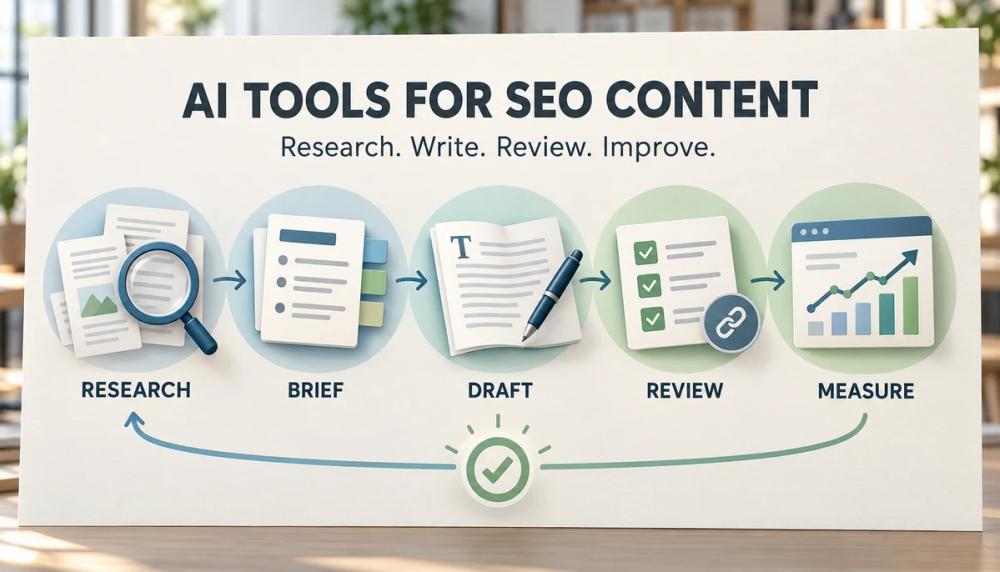
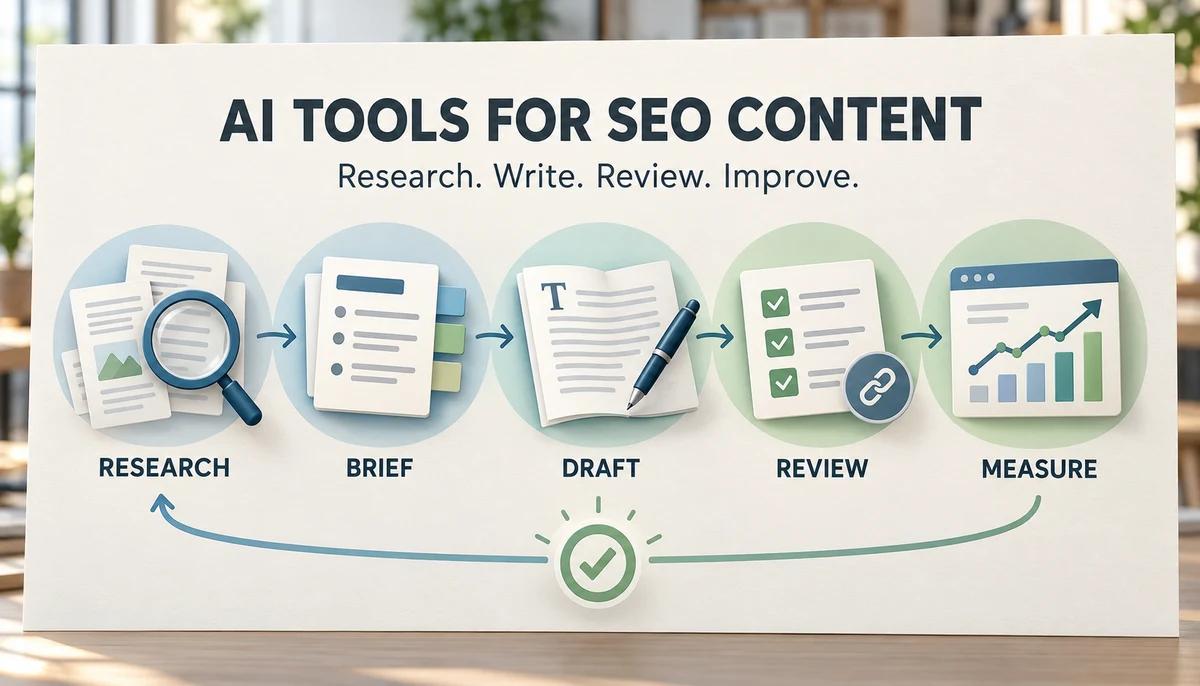
An AI writing assistant, a search research platform, and a content optimization editor solve different problems. Buying all three does not automatically produce better articles. Start with the work your team struggles to finish: choosing a useful topic, building an evidence-based brief, editing a draft, or improving a page that already attracts visitors.
This guide explains how to connect those jobs into a practical workflow. The product examples below are based on their official documentation, rather than a claimed hands-on performance ranking. Features and subscriptions change; evaluate the specific plan you intend to use.
Start with a question and evidence
Before drafting, write down the reader's question, the intended audience, and the action the page should help them take. For a comparison article, that action might be choosing a shortlist. For a tutorial, it might be completing a task without contacting support.
Collect source material before asking AI to write: product documentation, customer questions, your own screenshots, and relevant search performance data. Ask the assistant to separate supported facts from questions that still need research. A plausible paragraph is not evidence that its claims are true.
These are overlapping options, not a shopping list. Test one briefing or editing product on your existing material before adding another subscription.
Build a repeatable publishing workflow
1. Prepare a source-led brief
Record the primary question, supporting questions, evidence links, necessary examples, and topics outside the page's scope. Include one contribution that competitors cannot supply by simply summarizing the same search results: an original comparison, a worked example, or a documented implementation detail.
2. Draft one section at a time
Give the assistant the relevant source notes and ask it to flag missing evidence. For example: “Explain these three product differences using only the attached documentation. Mark unsupported details as questions.” Review that section before expanding the article.
Avoid requests to fabricate user quotes, personal experience, rankings, or performance statistics. If a scenario is hypothetical, label it as an example.
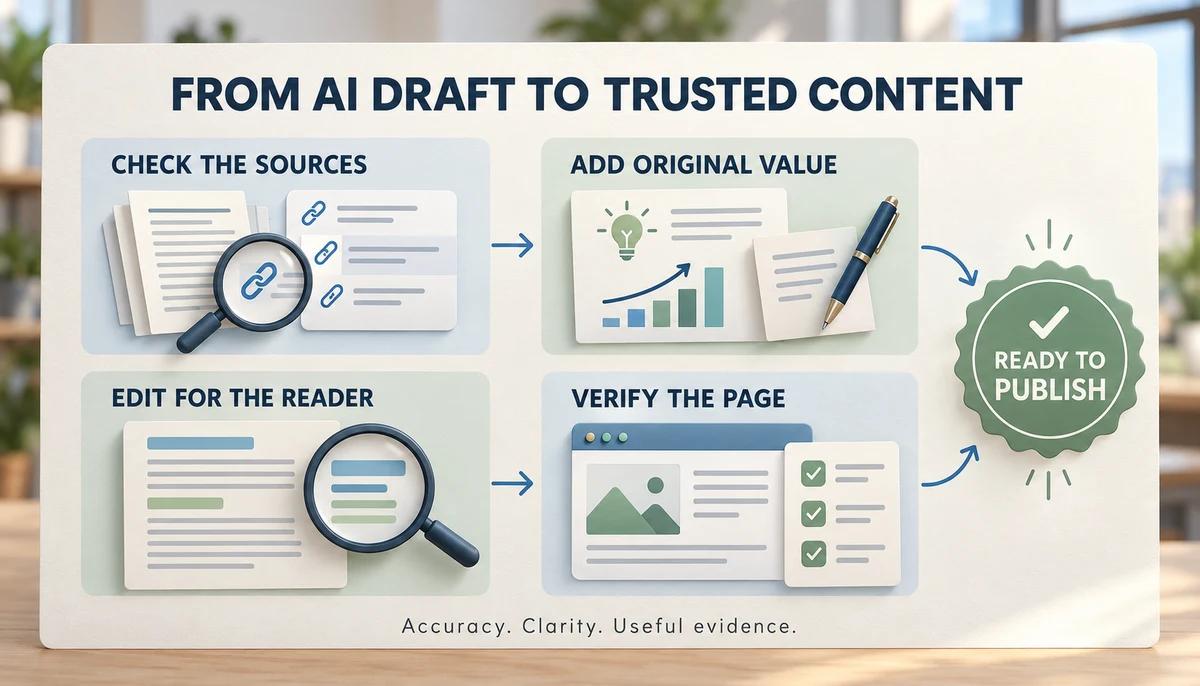
3. Edit for usefulness before scoring
Read the page without its optimization sidebar. Can a reader understand the answer and the tradeoffs? Remove repeated introductions, unsupported superlatives, and paragraphs that merely rephrase the heading. Then use an editor to find missing context or unclear language. A vendor's content score is a diagnostic aid, not a search engine's verdict.
4. Check the complete page
Review the visible title, metadata, tables, image descriptions, product names, dates, and links. A correct paragraph can still be undermined by an outdated price in a comparison table or an old year in the search snippet.
Google's guidance on generative AI content calls for manual accuracy review and warns against producing large amounts of content without adding value. Apply the same scrutiny to AI-assisted updates as to new articles.
Prepare for AI search without abandoning SEO
Use the current names AI Overviews and AI Mode when discussing Google's search features. SGE was an earlier experimental name, rather than the appropriate label for every current AI search result.
Google says no special AI markup is required for these features. See its AI features guidance. Clear answers and useful evidence are sensible editorial goals, but they do not guarantee citations.
Measure the workflow, not just output volume
Keep a record of editing time, factual corrections, publication dates, and the pages changed. Compare search impressions, clicks, and relevant conversions over a period that makes sense for your traffic and seasonality. If you monitor AI answers, save the prompt, platform, date, and actual response; a single answer is only a snapshot.
Do not treat an AI detector as proof of accuracy or authorship. The editorial question is whether the page is correct, helpful, and supported by evidence.
Build a small, maintainable stack
Begin with your existing analytics and a documented review process. Add a specialist tool when you can identify a recurring job it will improve. Use GEOly's tool directory to discover candidates, then confirm current capabilities, pricing, and limits on the vendor's website.