
The Ultimate Guide to Content Marketing Strategy: Drive Traffic & Engagement
Let's be honest: most content exists to fill space, not to drive revenue. You’ve likely felt the frustration of spending days on a deep-dive article only for it to vanish into the third page of Google without a trace. In a crowded market, simply "creating content" is a recipe for invisibility. To actually cut through the noise, you need a content marketing strategy that treats every blog post as a strategic asset built to hit specific business goals.
This guide is a battle-tested blueprint for turning your expertise into traffic. We’ll walk through how to pinpoint what your audience actually searches for, and how to align those needs with SEO and Generative Engine Optimization (GEO) tools. From defining your core message to measuring performance, we’ll cover the essential steps to boost engagement and secure the digital authority your brand deserves.
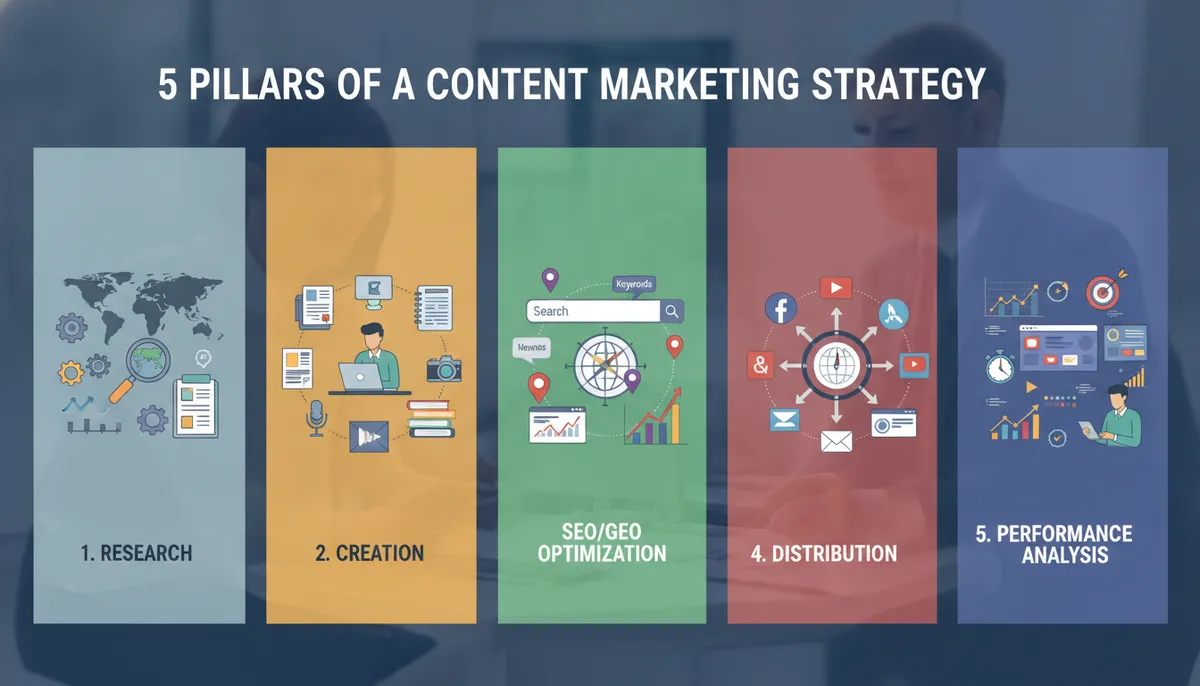
1. What is Content Marketing Strategy & Why It's Indispensable
Think of your content marketing strategy as the GPS for your brand's digital presence. Without it, you’re essentially driving through a thick fog, hoping you eventually stumble onto a landmark. A strategy is far more than a list of blog topics: it is a comprehensive roadmap that aligns your creation, distribution, and management with specific business outcomes. While tactics represent the "how", like deciding to use a specific SEO tool or launching a newsletter, your strategy defines the "why" and the "what." It ensures that every word you publish actually has a job to do.
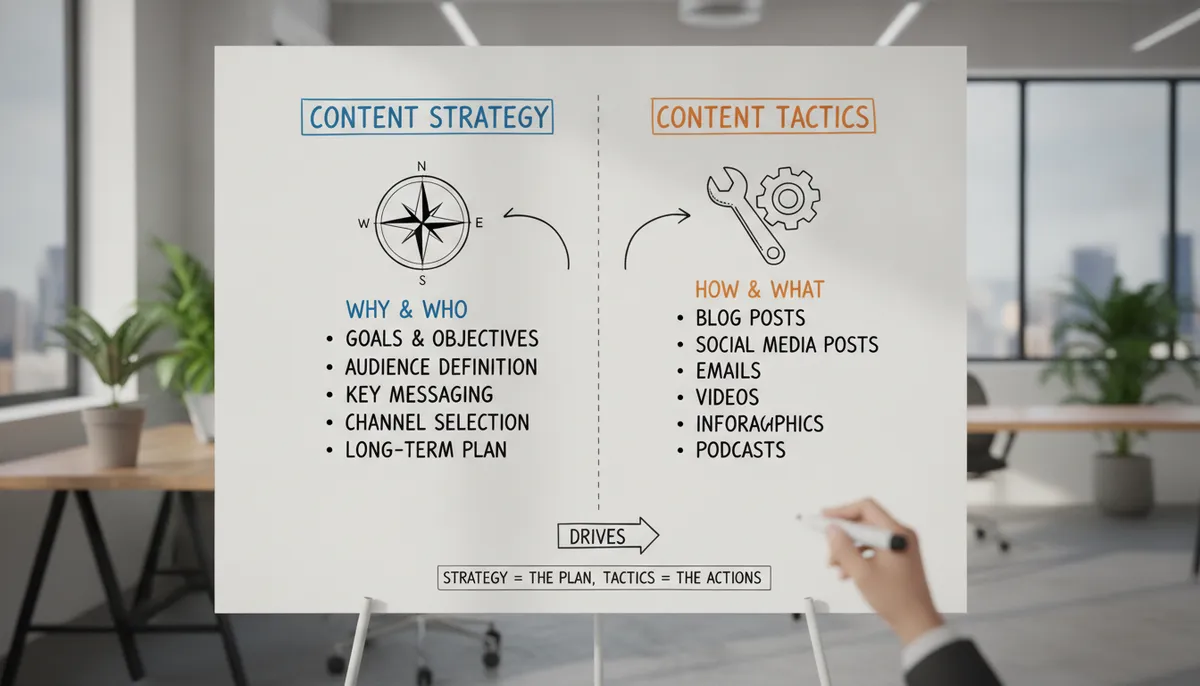
Why is this roadmap so critical? Because in the crowded world of search, authority is your most valuable asset. When you provide consistent, high-value insights, you build a bridge of trust with your audience. I recently saw a small SaaS startup, "ClearMetric," struggle for six months with zero growth because they were publishing "fluff" just to stay active. After developing a strategy focused on Generative Engine Optimization (GEO) trends, their organic traffic jumped by 150%. Search engines, and more importantly, real people, respond when they see you’ve done the work to understand their specific pain points.
A solid strategy also transforms your content from a cost center into a lead-generation machine. By mapping out the buyer’s journey, you can meet prospects exactly where they are, whether they are just starting to research SEO tools or are ready to make a purchase. This targeted approach nurtures loyalty far better than any intrusive ad ever could. Beyond that, a strategic framework makes your technical SEO efforts significantly more effective. Instead of random posts, you create clusters of relevant information that naturally attract high-quality backlinks and boost your domain authority.
Ultimately, it comes down to the bottom line: cost-effectiveness. Traditional advertising requires a constant cash infusion to stay visible, but a strategic content asset continues to provide ROI long after the initial "publish" click. I’ve watched marketing teams slash their customer acquisition costs by nearly half just by focusing on a strategy that prioritizes long-term value over quick wins. In an era where AI-driven search is changing the rules of the game, having a documented strategy isn't just a best practice. It is the only way to ensure your brand remains relevant and visible.
2. Building Your Content Foundation: The Core Pillars of Strategy
You cannot write for "everyone" and expect to rank for "someone." Building a solid foundation starts with knowing exactly who is on the other side of the screen, which means moving far beyond basic demographics. You need to dive into psychographics, the specific pain points, professional aspirations, and daily SEO hurdles your readers face. Use customer interviews, social media listening, and your website analytics to build detailed buyer personas that feel like real people with real problems.
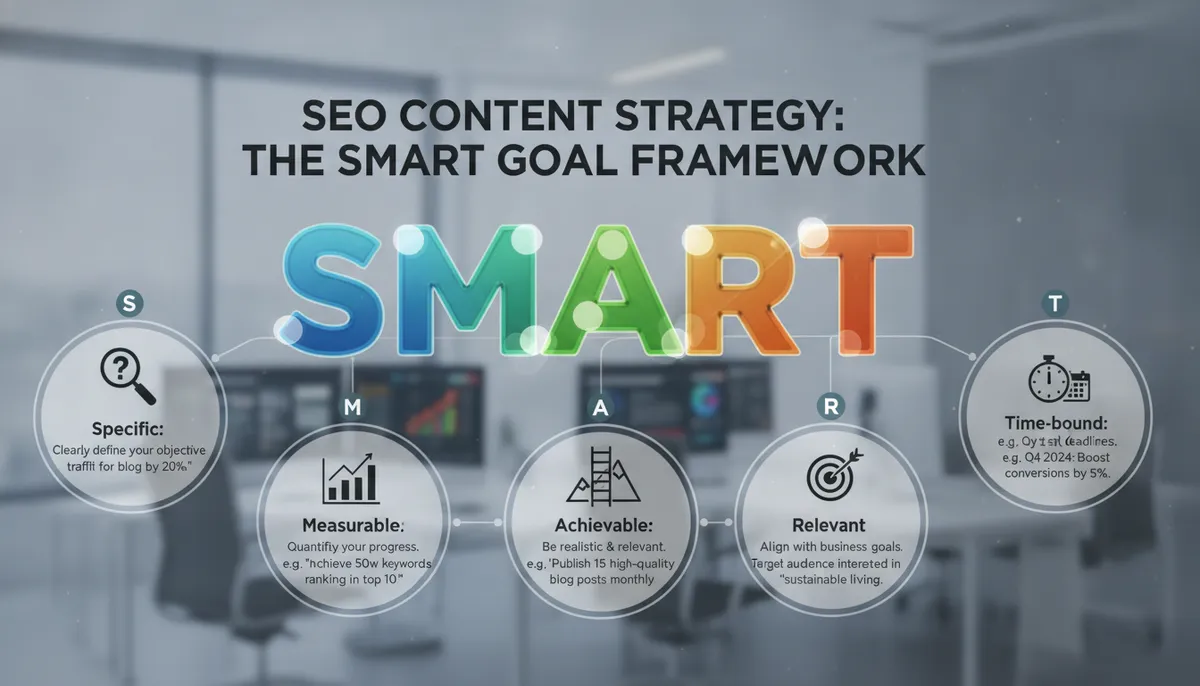
Once you know who you are talking to, you need to decide exactly where you are taking them. Avoid vague ambitions like "getting more traffic" and lean on the SMART framework to keep your strategy sharp and accountable. Set specific, measurable targets, such as increasing organic traffic by 20% within six months or generating 50 qualified leads monthly from your tool comparisons. When your goals are time-bound and relevant, every article you publish serves a clear, tactical purpose for your brand.
You aren't operating in a vacuum, so your strategy shouldn't either. Conduct thorough market and competitor research to see where other players are winning and, more importantly, where they are dropping the ball. Identify specific content gaps that allow you to carve out a unique angle rather than just adding to the noise of the current search results. Staying ahead of industry trends and monitoring the content landscape ensures your brand remains a trusted authority as generative engine optimization continues to evolve.
If you already have content live, stop and look back before you start sprinting forward. A comprehensive content audit allows you to inventory your existing assets and see which pieces are actually pulling their weight. Analyze your performance metrics to find hidden gems that just need a refresh or underperformers that are better off being repurposed or retired. This gap analysis reveals the exact topics your audience is currently craving that you haven't managed to cover yet.
Finally, choose the content types and channels that align with how your audience actually consumes information. Whether it is a deep-dive technical guide, a quick video tutorial, or an insightful case study, the format must suit the reader's immediate intent. Don’t try to be everywhere at once; instead, focus your distribution on the specific platforms where SEO professionals and AI enthusiasts hang out. This targeted approach ensures your high-quality work reaches the eyes of people who will actually act on it.
3. Integrating SEO: Making Your Content Discoverable
Let’s be honest: keyword research is basically digital mind-reading. You aren't just hunting for high-volume phrases; you’re trying to figure out what’s actually going on in your user’s head. Are they just browsing for information, or are they ready to pull out their credit card for a new SEO tool? To get this right, you need a mix of broad short-tail terms and those specific, high-intent long-tail phrases that actually convert. Tools like Ahrefs, SEMrush, or Google Keyword Planner are your best friends here, helping you map these keywords to specific stages of the buyer’s journey so you aren’t just shouting into the void.
Once you have your map, you need to build the storefront. On-page SEO is where your strategy meets the reader's eye. Your title tags and meta descriptions should do more than just house a keyword, they need to earn the click. Inside the post, use H1, H2, and H3 tags to create a logical path that both Google and humans can follow. Don’t ignore the "invisible" stuff either: image optimization and descriptive alt text help with accessibility and image search, while a mix of internal and external linking builds the topical authority you need to stay relevant in a crowded market.
Content that ranks well in the era of Generative Engine Optimization (GEO) usually has one thing in common: it’s actually helpful. In the world of E-E-A-T (Experience, Expertise, Authoritativeness, and Trustworthiness), Google wants to see that you know your stuff. This means backing up your claims with verifiable sources and highlighting author expertise through clear bios. If a subject matter expert didn't write the piece, at least have one review it. Providing real, in-depth value is no longer optional, it's the bare minimum for staying discoverable.
Finally, remember that people don't read on the web, they skim. If your article looks like a wall of gray text, they’re gone in three seconds. Use bullet points, numbered lists, and short paragraphs to keep the rhythm fast and the content "scannable." Your goal is to maintain an engaging, professional voice that resonates with your audience while satisfying the technical requirements of search engines. It’s a delicate balancing act: you’re writing for an algorithm that demands structure, but you’re ultimately trying to help a human solve a real-world problem.
4. Powering Your Strategy with GEOly: Discover the Best SEO & Content Tools
Once you’ve nailed down your SEO integration, the next hurdle is actually picking the tools to get the job done. Let’s be honest: the martech landscape is a mess right now. New "game-changing" SEO and AI tools seem to pop up every Tuesday, and trying to vet them all is a full-time job you didn't sign up for. Whether you're balancing a tight budget or trying to fit a new AI writer into a legacy workflow, the search for the "right" tool often leads to analysis paralysis rather than actual content growth.
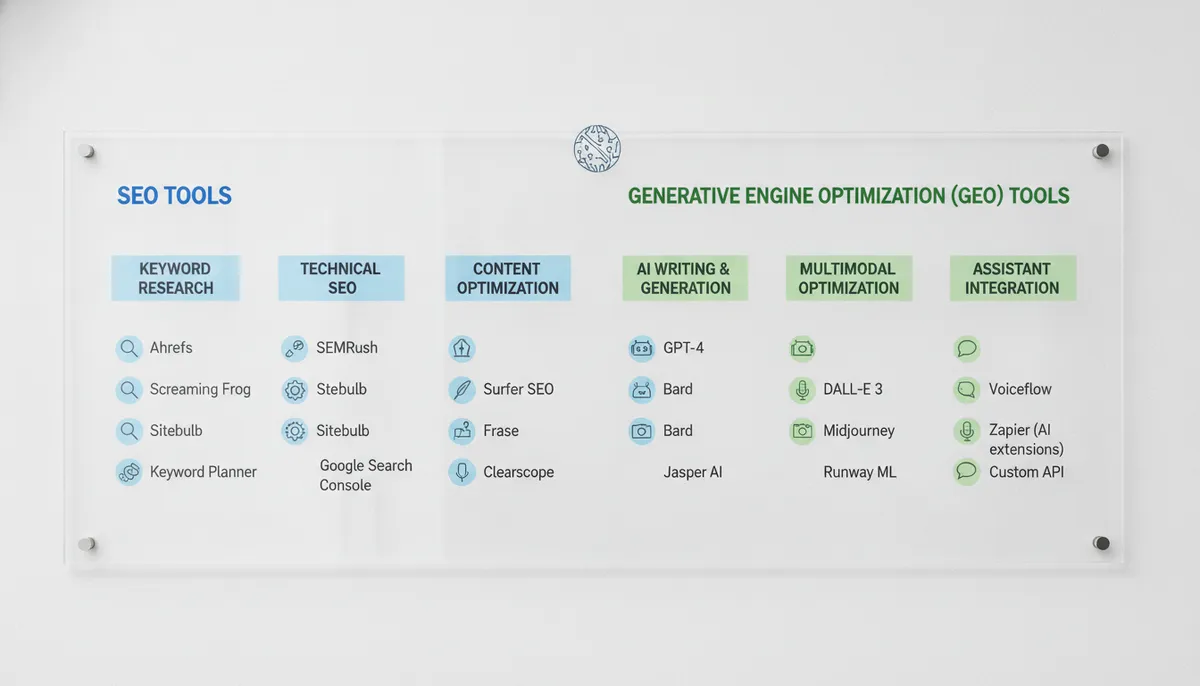
That’s where GEOly comes in. Think of it as your curated shortcut, a directory built specifically for SEOs and those of us navigating the new world of Generative Engine Optimization (G. E. O.). Instead of scrolling through endless Reddit threads or generic "top 10" lists, you can find exactly what you need to move the needle. From high-power keyword research platforms to niche AI writing assistants, technical auditing tools, and content brief generators, the directory organizes the chaos. It’s where you go to find backlink analysis platforms that fit your specific needs and the latest Generative AI tools for repurposing your wins.
Building a tech stack shouldn't feel like a gamble. Use GEOly to find tools for competitor monitoring, plagiarism checks, and AI personalization that actually works. Here’s a quick tip: don't try to buy everything at once. Start by identifying your biggest bottleneck, maybe it’s content ideation or technical SEO, and use the directory to pick one highly-rated tool to solve it this month. By focusing on quality over quantity, you’ll turn your strategy from a theoretical plan into a high-performing engine that delivers results.
5. Execution, Distribution & Continuous Optimization
Finding the right tools on GEOly is a great start, but the real work begins when you turn those insights into a repeatable system. Think of your content calendar as the backbone of your entire operation, not just a list of dates, but a strategic map that aligns your writers, formats, and distribution channels. Consistency is the secret sauce here; by planning your topics months in advance, you ensure you're serving the right answers to the right people at every single stage of their buyer's journey without the "what do we post today?" panic.
Most marketers spend 90% of their time writing and 10% promoting, but that’s a recipe for invisible content. Once you hit publish, your job is only half done; you need to actively push that content through your email list, social profiles, and the specific niche communities where your audience actually hangs out. Don’t be afraid to repurpose your hard work, either, take a deep-dive tutorial and chop it into five bite-sized LinkedIn posts, an infographic, or a short video. If a piece starts gaining organic momentum, consider a small paid campaign via social ads or SEM to amplify that reach and truly move the needle.
Data shouldn't just sit in a static dashboard; it should actively drive your next move. Track the metrics that actually impact your bottom line, like lead generation rates, conversion spikes, and time on page, using Google Analytics and Search Console. For instance, if you notice your GEO tool comparisons have a high bounce rate, it’s a clear signal to simplify your formatting or add more interactive elements. The goal is to move beyond vanity metrics like "page views" and start asking "how many people actually found the solution they were looking for?"
The final piece of the puzzle is relentless, agile refinement. The world of Generative Engine Optimization shifts weekly, so your evergreen content needs to be refreshed just as often to stay accurate and maintain its rankings. Experiment with different CTAs or headline structures through A/B testing to see what actually sparks the most engagement from your readers. Stay flexible, keep a close eye on search engine algorithm changes, and always be ready to pivot your strategy based on real-world feedback rather than just sticking to a plan that’s six months out of date.
Conclusion
A solid content strategy isn't just a "nice-to-have" anymore, it’s your operational blueprint for actually being seen in an AI-driven search world. It’s more than just hitting "publish"; it’s about weaving together audience psychology, sharp business goals, and the kind of technical SEO that keeps you relevant. This process is a marathon, not a sprint. It demands constant tweaking and a stubborn commitment to quality, but when your organic traffic starts climbing and your brand authority sticks, you’ll see the effort is worth every hour.
When you systematically plan, distribute, and analyze your work, you stop guessing and start growing. You aren’t just creating noise; you’re building a destination for your audience. If you're ready to stop the guesswork and start scaling, explore GEOly. As the ultimate Generative Engine Optimization Directory, we've curated the cutting-edge SEO and content tools you need to stay ahead of the curve. Dive into the directory today and find the tech stack that will drive your digital success.