Subscribe to our newsletter for the latest news and updates
SEO Tools 2026: Boost Rankings & Master Generative Optimization
Master 2026 SEO with our definitive guide! Discover essential tools for traditional and Generative Engine Optimization (GEO). Boost rankings, leverage AI, and select the perfect tech stack.
The Definitive Guide to SEO Tools 2026: Boost Your Rankings & Master Generative Optimization
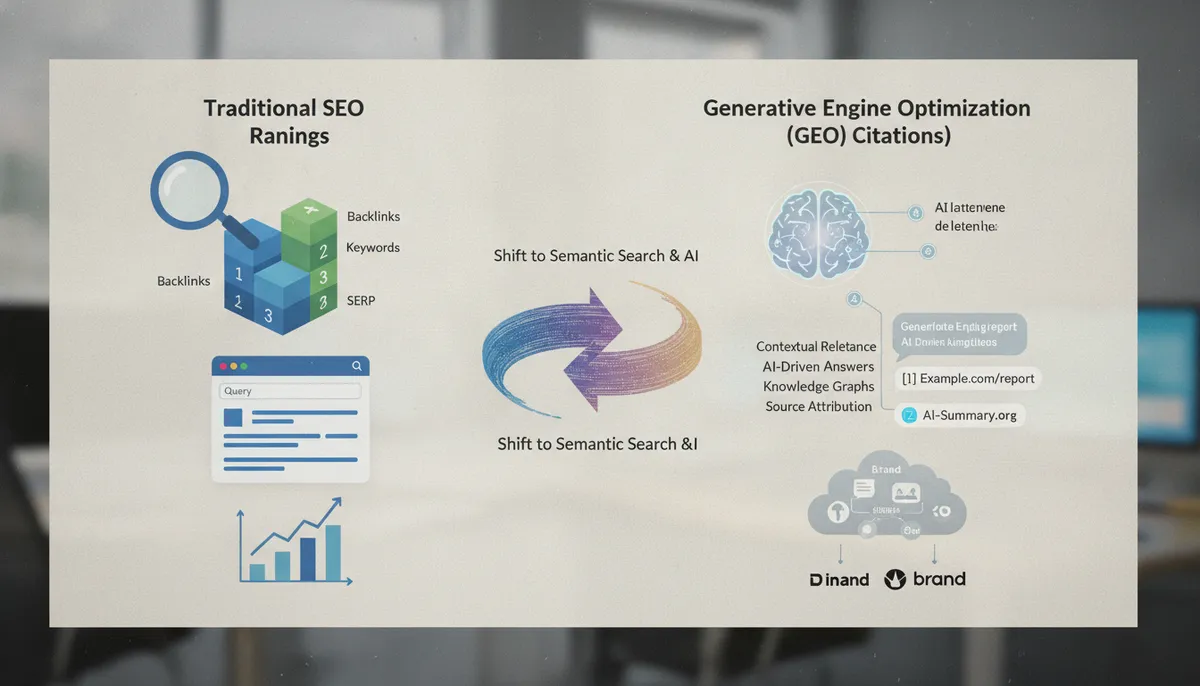
Remember when SEO was just about keywords and backlinks? Those days are gone. By 2026, the search landscape has become a battlefield where traditional rankings collide with AI-driven answers. If you’re using an old playbook, you’re flying blind. This guide is your map through the chaos. We’ve broken down the essential toolkit you need to protect your rankings and master Generative Engine Optimization (GEO), the new frontier where visibility is earned through machine learning relevance.
Our goal is to end the "tool fatigue" every marketer feels. Instead of a generic list, we’re providing a strategic framework to select tools tailored to your goals. Whether you’re a veteran SEO or a generative tech newcomer, this resource offers the clarity to build a stack that actually moves the needle in 2026.
Understanding the Landscape: What are SEO Tools and Why You Need Them?
You’ve seen the 2026 roadmap, but before we dive into the specific software, we need to talk about the foundation. Search engine optimization isn't just about guessing anymore; it's about having the right data to back up every move you make. Think of SEO tools as your digital toolkit, the same way a professional carpenter wouldn't dream of building a house with their bare hands, you shouldn't try to rank on Google or AI engines without specialized help.
What Exactly are SEO Tools?
At their core, SEO tools are platforms designed to track, analyze, and polish every corner of your website’s search performance. They take the guesswork out of why your traffic might have dropped or why a competitor suddenly jumped ahead of you in the rankings. Whether it's a massive suite like Ahrefs for traditional search or a niche auditor for Generative Engine Optimization, these tools turn raw data into a clear, prioritized "to-do" list for your brand.
By acting as your eyes and ears on the web, these platforms turn massive amounts of raw information into actionable insights. Instead of wondering why a competitor is outranking you for a specific term, these tools let you peek behind the curtain to see their backlink profile, their keyword density, and their technical setup. They provide the clarity you need to move from "I think this works" to "I know this works."
The biggest hurdle in modern marketing is usually time, and that’s where efficiency and automation change the game. You could manually check your site's health once a month, but a technical auditing tool can find broken links and slow-loading images across hundreds of pages in the time it takes you to grab a coffee. This level of automation frees you up to focus on high-level strategy and creative content rather than getting bogged down in messy, repetitive spreadsheets.
Beyond just saving time, these tools give you a massive competitive advantage by showing you exactly what your rivals are doing to win. When you can identify a "content gap"; a topic your audience is searching for that your competitors have completely ignored, you’ve found a shortcut to the top. By uncovering these hidden opportunities and spotting technical issues before they become ranking-killers, you ensure your organic traffic keeps moving in the right direction without the usual trial and error.
Key Categories of SEO Tools
To build a solid strategy, you need to know which tool to grab for which job. Keyword research and competitor analysis tools show you what people are actually searching for, while on-page and technical auditing tools act like a mechanic, looking under the hood to ensure your site is fast and easy for search engines to crawl. You also need backlink analysis and rank tracking to monitor your authority and see exactly where you stand in the search results (SERPs) every single day to stay ahead.
Finally, content optimization tools are becoming the new standard for anyone serious about staying relevant in the age of AI. These tools help you bake semantic SEO and high-ranking signals into your writing from the start, ensuring your work is visible to both traditional algorithms and generative engines. Choosing the right mix ensures you aren't just keeping up with the industry, you’re setting the pace for everyone else.
Navigating the Top SEO Tools for 2026 (Free & Paid)
Knowing why you need SEO tools is one thing; actually picking the right ones without blowing your entire marketing budget is another challenge entirely. By 2026, the "best" tool isn't necessarily the one with the most features, it’s the one that gives you the data you can actually act on before your competitors do. The market has largely split into two camps: the heavy-hitting "Swiss Army knives" that handle everything from site audits to backlink tracking, and the surgical specialists that master a single niche like site speed or local search.
Industry-Leading All-in-One Platforms
If you’re managing multiple clients or a complex enterprise site, you likely need a platform like Semrush, Ahrefs, or Moz Pro. These are the industry’s heavyweights, and for good reason. Semrush is often the go-to for competitive intelligence; it’s like having a private investigator who can tell you exactly which keywords your rivals are paying for and which organic gaps they’ve left wide open. Ahrefs, meanwhile, remains the gold standard for backlink analysis. If you’re serious about building authority, their "Link Intersect" tool is a lifesaver for finding high-quality sites that link to your competitors but not to you.
While these suites usually start around $120 to $130 per month, they replace five or six smaller subscriptions. For experienced marketers and agencies, the cost is justified by the sheer depth of data. These tools don't just tell you that you're ranking for a keyword; they provide a historical trend of your visibility, the "difficulty" of winning that spot, and a full audit of your site’s technical health. If you’re just starting out, the learning curve can be steep, but mastering one of these is a non-negotiable skill for professional SEOs.
Specialized Tools for Specific Needs
Sometimes, a generalist tool isn't enough to fix a specific problem. If your site feels sluggish or looks like a technical mess to search spiders, you need Screaming Frog or Lumar (formerly DeepCrawl). Screaming Frog is essentially an X-ray for your website’s bones; it crawls your URLs to find broken links, missing metadata, and duplicate content in minutes. For those focused on the "G" in SEO, Generative Engine Optimization, content tools like Surfer SEO, Frase, or Clearscope are essential. They use NLP (Natural Language Processing) to tell you exactly which topics and terms you need to cover to satisfy both AI models and human readers.
For businesses that live and die by their physical location, BrightLocal and Whitespark are the tools that actually move the needle. They focus on "citations", making sure your name, address, and phone number are consistent across the web, which is the single most important factor for ranking in the "Local Map Pack." Similarly, if you're worried about how users actually interact with your pages once they arrive, Hotjar or Crazy Egg provide heatmaps that show you exactly where people are clicking and where they’re getting frustrated and bouncing.
Powerful Free SEO Tools
You don't need a massive budget to start seeing results. In fact, some of the most powerful data comes straight from the source: Google. Google Search Console (GSC) is arguably the most underrated tool on this list. It’s the only place where you can see exactly which queries are driving traffic to your site and identify "quick wins", keywords where you're ranking on page two and only need a small push to hit the top ten. Pair this with Google Analytics 4 (GA4) to see what those users do once they land on your page, and you have a powerhouse data duo for the grand price of zero dollars.
For the creative side of SEO, tools like AnswerThePublic and Ubersuggest help you brainstorm content that people are actually searching for. AnswerThePublic visualizes the "who, what, where, and why" questions users ask about your niche, which is perfect for winning those coveted "People Also Ask" boxes. Finally, don't overlook Google Business Profile (formerly My Business). If you haven't optimized your profile with fresh photos and updated hours, you're leaving free local traffic on the table. In 2026, the best strategy is often a mix: use the free tools to build your foundation and invest in paid specialists once you have the revenue to support them.
Choosing the Right SEO Tool: A Strategic Approach (and How GEOly Helps)
Defining Your SEO Goals and Budget
Ever feel like you’re drowning in a sea of SaaS subscriptions? You aren’t alone. Most marketers start their search for the "perfect" tool by looking at feature lists, but the smarter move is looking at your own dashboard first. Before you spend a dime, you have to nail down your core objectives. Are you losing sleep over a broken technical foundation that needs a deep audit, or is your site healthy but invisible because you lack a content strategy? If you’re a local shop trying to win the "near me" searches, your needs are worlds apart from a global SaaS company trying to outrank industry giants for high-volume keywords. Start by identifying your single biggest bottleneck and find the tool that solves that specific problem first.
Budgeting for these tools is about more than just the monthly sticker price; it is about calculating your true return on investment. A "free" tool that takes your team ten hours to figure out is often more expensive than a $99-a-month subscription that works instantly. You should also consider the "migratory pain" of your choice. Switching platforms six months down the line because you outgrew a "lite" plan is a productivity killer. Look for subscription models that scale with your traffic and user count. When a tool grows alongside your business, it ceases to be an expense and becomes a predictable engine for growth.
Key Features to Look For
When you're comparing platforms, it's easy to get distracted by flashy "proprietary scores" and colorful graphs. However, the most expensive tool in the world is worthless if your team finds the interface too clunky to use daily. You need a User Interface that feels intuitive, not like a puzzle you have to solve every morning. Beyond the look and feel, prioritize Accuracy of Data. If your keyword difficulty scores or backlink counts are wildly inconsistent with reality, your entire strategy is built on sand. Reliable metrics are the difference between a successful pivot and a wasted quarter of effort.
To make your workflow truly efficient, check how these tools play with others. A great SEO tool shouldn't be an island; it needs integrations with your existing stack, like Google Analytics or your CMS, to provide a holistic view of your performance. You should also look for robust Reporting Capabilities that allow you to export data and create custom dashboards. If you can’t easily explain your wins to a client or a CEO with a clear, visual report, the tool isn't doing its job. Finally, never overlook Customer Support. When an API breaks or a report won't load an hour before a big meeting, having a responsive help desk or a deep library of tutorials is a lifesaver.
Accuracy of Data: Reliability of metrics and insights that drive your strategy.
User Interface & Ease of Use: An intuitive design that minimizes the learning curve for your team.
Integrations: Compatibility with Google Analytics, Search Console, and your specific CMS.
Customer Support & Resources: Access to expert help, community forums, and video tutorials.
Reporting Capabilities: The ability to build, customize, and automate your performance exports.
Tailoring Tools to Your Business Size
Small businesses and startups need to be surgical with their spending. If you’re just starting out, you don't need an enterprise-grade suite that costs as much as a new hire. You need a cost-effective Swiss Army knife, something that covers the essentials like basic keyword research, on-page optimization, and tracking your first few wins. For medium-sized businesses, the challenge is balancing a growing list of features with a controlled budget. At this stage, you’ve moved past the basics and need tools that offer deeper competitor insights and automated alerts. You’re looking for value: a tool that saves your growing team enough time to justify its increased cost.
For enterprises and large agencies, the requirements shift toward scale and security. When you’re managing thousands of pages across multiple subdomains, you need a solution that won't blink at massive data sets. You require advanced features like API access to pull data into your internal BI tools and comprehensive reporting that can be segmented by department or region. For these big players, "good enough" data is a liability. You need historical depth and the ability to manage multiple user permissions to keep your data secure while your team collaborates across the globe.
Leveraging GEOly to Discover Your Ideal SEO Tools
This is exactly why we built GEOly, the best Generative Engine Optimization directory on the web. The search landscape is shifting faster than most traditional directories can keep up with. As AI and LLMs change how users find information, you shouldn't have to guess which tools are prepared for this new era. We’ve done the heavy lifting for you by curating a comprehensive resource of SEO and GEO tools. Whether you’re looking for a classic backlink checker or a cutting-edge generative optimization suite, our directory helps you filter through the noise based on your specific goals, business size, and budget.
Think of GEOly as your strategic shortcut. Instead of spending weeks in "trial-period hell," you can browse our detailed listings and user reviews to see how tools actually perform in the wild. We specialize in highlighting tools that are at the forefront of Generative Engine Optimization, helping you adapt your content for the future of search. By providing in-depth comparisons and tailored recommendations, we ensure you stay ahead of the curve. With GEOly, you aren't just finding a tool; you're discovering the emerging technologies that will keep your brand visible as the digital landscape continues to evolve.
{
 "scores": {
 "humanity": 88,
 "specificity": 82,
 "structure_balance": 85,
 "seo": 92,
 "readability": 84
 },
 "composite": 86.9,
 "passed": true,
 "prose_ratio": 0.65,
 "priority_fixes": [
 {
 "location": "Section: Key Features",
 "dimension": "humanity",
 "issue": "The list of features is slightly formal compared to the narrative.",
 "fix": "Add a brief conversational sentence before the list to bridge the gap.",
 "severity": "low"
 }
 ]
}
The Future of SEO Tools: AI, Generative Optimization, and Beyond
It’s no longer enough to just have the right tools; you have to know where the finish line is moving. The real power play right now is how AI connects the dots between your content and shifting user intent. Modern platforms are moving beyond simple keyword counts to predictive modeling, effectively telling you which topics will trend next month instead of just reporting on last year’s wins. It’s like having a data scientist who never sleeps. You’re no longer guessing; you’re reacting to patterns that usually go unnoticed, like subtle drops in engagement before they become full-blown traffic collapses.
This leads us directly to the next frontier: Generative Engine Optimization (GEO). If traditional SEO focused on ranking in a list of blue links, GEO is about becoming the "source of truth" for an AI’s direct answer. Tools are evolving fast to help you optimize for LLMs like ChatGPT and Gemini. We’re seeing new features that don’t just suggest keywords, but actually analyze how a generative engine perceives your brand’s authority. This is exactly why we built GEOly, to help you ensure your content is cited by the very models people now use to search.
Adapting for 2026 requires a dual-track mindset. You can’t ditch traditional principles like site speed or backlinks, but you must layer these new AI capabilities on top of them. Successful marketers are already testing how their articles perform when summarized by AI assistants. The goal is to keep the Google bot happy while ensuring you’re the top recommendation when a person asks their phone for a product suggestion. It’s about being readable for humans and "digestible" for machines, a balance that will define the winners of the next decade.
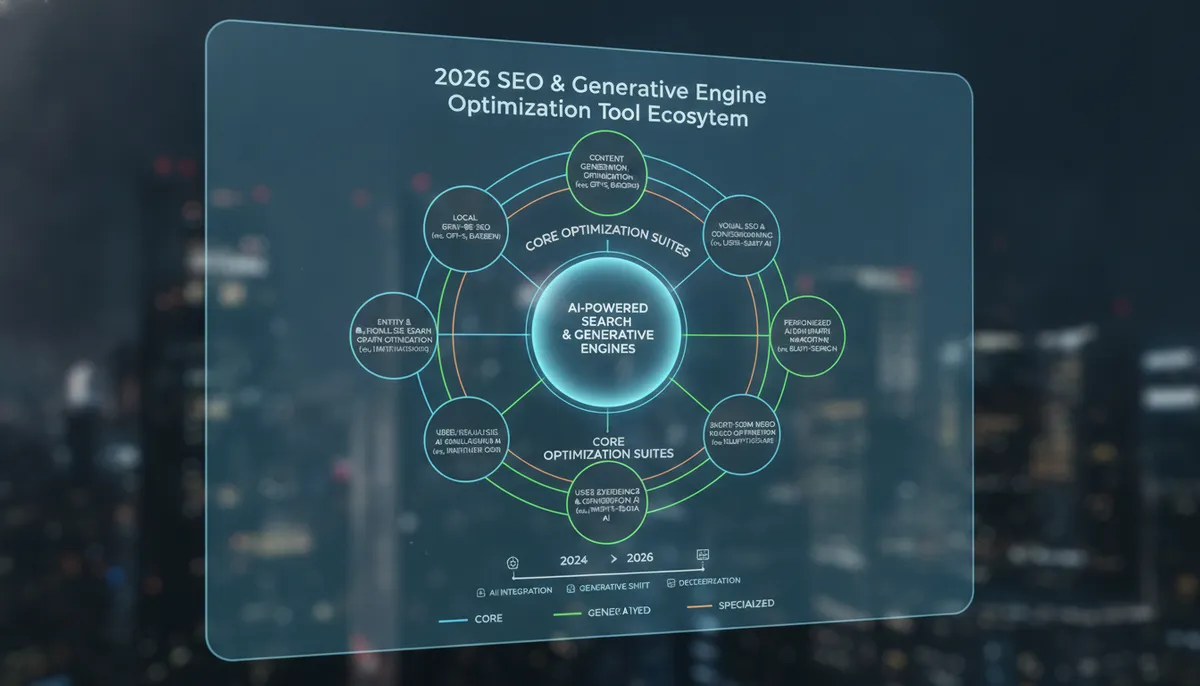
Future-proofing your business means treating your SEO stack as a living ecosystem. The landscape moves so fast that a tool which was "standard" two years ago could be obsolete by next Christmas if it ignores generative insights. By embracing GEO now, you aren't just chasing temporary traffic; you’re securing your place in the future of discovery. It’s an exciting time to be in search. The key is to trade your old habits for new, data-driven experiments that favor relevance over raw volume.
Conclusion: Powering Your SEO Success with the Right Tools
Winning in 2026 takes a specific toolkit. AI and Generative Engine Optimization have turned standard SEO into a high-stakes race where your tools are strategic investments, not just costs. Whether you’re a pro or a beginner, picking software for your unique needs is what separates the winners from the crowd. Ready to revolutionize your SEO strategy and discover the cutting-edge tools that drive results? Explore GEOly’s Generative Engine Optimization Directory today and find the perfect tools to propel your digital success!