
GEO vs. SEO: A Marketer's Guide to Dual Optimization in the AI Era
If you feel like the ground is shifting under your feet, you’re not imagining it. We’ve moved past the era where Google was the only game in town. Today, users are ditching blue links for instant, AI-synthesized answers from tools like Perplexity, ChatGPT, and AI Overviews. This shift has birthed a mandatory new discipline: Generative Engine Optimization (GEO). While SEO still fights for organic traffic, GEO ensures your brand is the source AI actually cites and recommends. With [Semrush](https://www. semrush. com/blog/geo-vs-seo/) reporting that 80% of users satisfy 40% of queries without clicking, mastering this dual optimization is no longer optional, it’s survival.
 ## Navigating the New Search Landscape: SEO, GEO, and AEO Explained
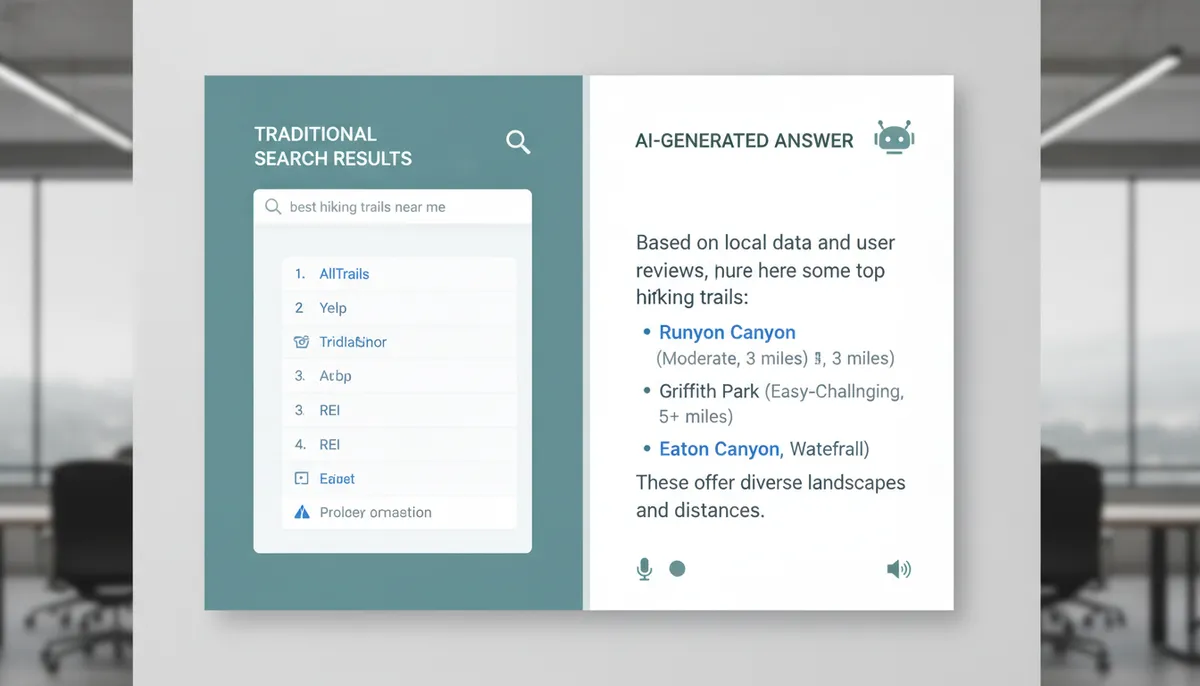
The shift from "searching for links" to "asking for answers" has fundamentally changed how we approach digital growth. While traditional Search Engine Optimization (SEO) still focuses on climbing the organic rankings to drive website traffic, a new player has emerged: Generative Engine Optimization (GEO). Think of SEO as the traditional library index that tells people where to find a book, while GEO is the process of ensuring a student cites your specific expertise in their final thesis. At GEOly, we see this as a transition from being a destination to becoming the source of truth for Large Language Models (LLMs) like ChatGPT, Perplexity, and Google’s AI Overviews.
What is SEO vs. GEO?
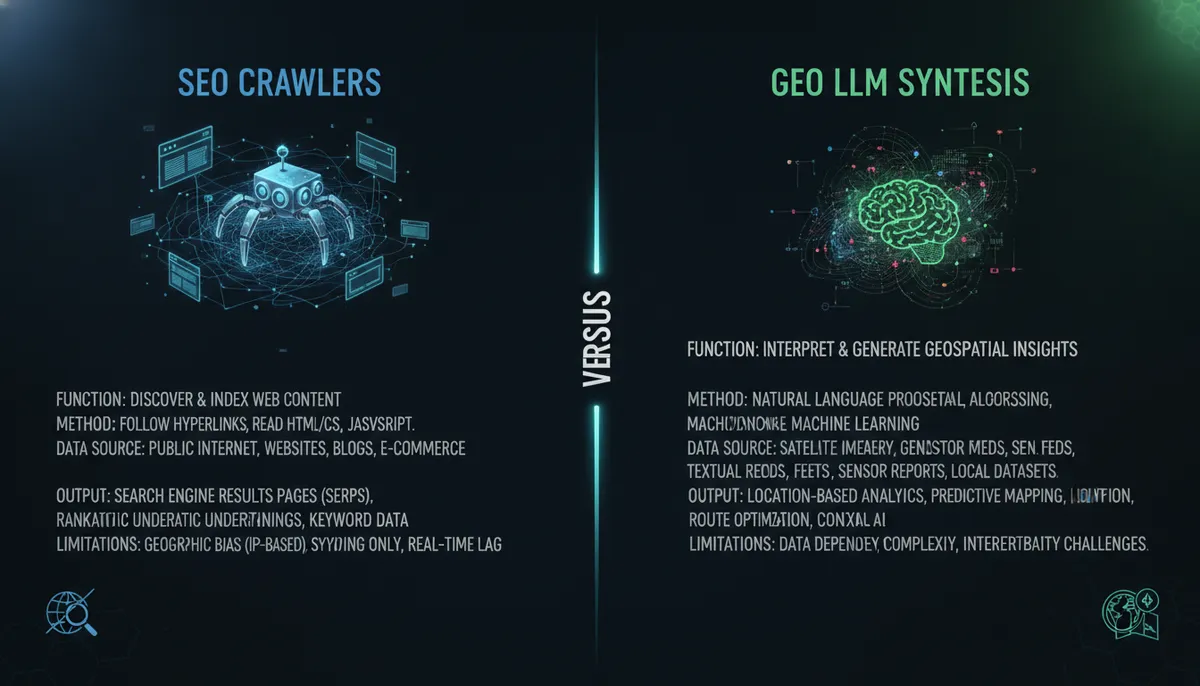
Traditional SEO is the old guard, built on web crawlers, indexers, and deterministic algorithms. Your goals here are familiar: build domain authority, earn backlinks, and optimize technical metadata to land a top spot on the Search Engine Results Page (SERP). Generative Engine Optimization (GEO), however, targets transformers and real-time synthesis. Instead of just ranking for a keyword, GEO aims to increase the likelihood that an AI will mention, cite, or recommend your brand within a synthesized answer. It’s a shift from guiding a user to a website to satisfying their intent immediately within the AI platform itself.
Understanding the AEO Connection
You’ve likely heard the term Answer Engine Optimization (AEO) used interchangeably with GEO. For all practical purposes, they are two sides of the same coin. AEO focuses specifically on the direct answer format, the "zero-click" results that satisfy a user without a single click-through. Research from Semrush shows that 80% of users now answer roughly 40% of their queries without ever leaving the search page. AEO is the tactical subset of GEO that ensures your content is structured clearly enough for an engine to extract a direct answer, whether it's a featured snippet or a conversational response from a chatbot.
Key Technical and Strategic Differences
The technical gap between these methodologies is significant. SEO relies on keyword density and site speed to appease Google’s crawlers. In contrast, GEO logic prioritizes factual precision, "context-independence" (content that makes sense when quoted in isolation), and clearly defined "Entities" that an LLM can reference with confidence. While an SEO strategist might spend months chasing high-authority backlinks, a GEO strategist focuses on off-site authority, managing brand presence on databases like Wikidata or Crunchbase, and ensuring content freshness, as AI models increasingly prioritize recent, verified data.
People Also Ask: What is AEO vs. GEO vs. SEO?
If you’re feeling overwhelmed by the acronyms, remember this: SEO gets you found by users, while GEO and AEO get you cited by machines. They aren't competing strategies; they are layers of the same visibility engine. SEO remains your foundation for driving organic clicks and long-form engagement. GEO and AEO are your tools for capturing the "zero-click" market and building brand authority in an AI-synthesized world. Success in this new era requires a dual-optimization approach, balancing the technical soundness of traditional search with the factual clarity required by generative engines.
 ## The Impact of AI on Search and Adapting Your Strategy
Search isn't just a list of links anymore; it’s a conversation. You’ve likely noticed that Google’s AI Overviews and tools like Perplexity often provide the answer before you even think about clicking a website. In fact, Semrush found that roughly 40% of queries are now answered without a single click. While this sounds terrifying, with reports showing AI sending up to 96% less volume than traditional search, there’s a massive silver lining: the traffic you do get is far higher quality. When a user clicks through an AI summary, they’ve finished their research and are actually ready to buy.
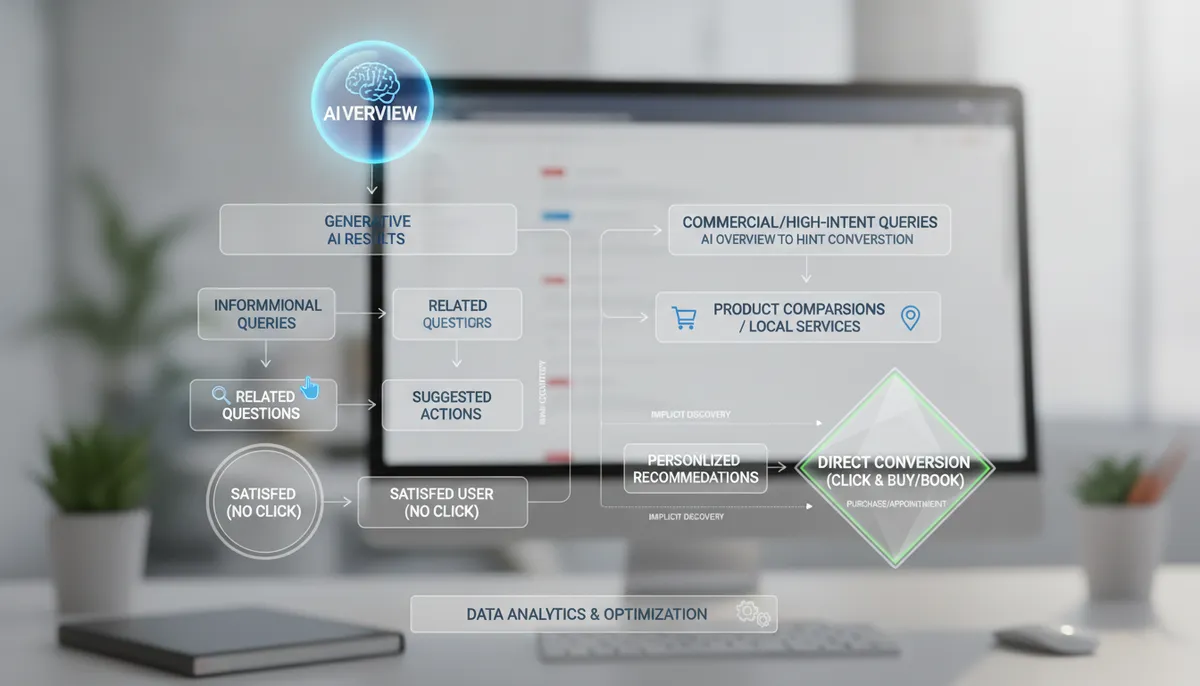 This shift means we must stop obsessing over raw traffic and start measuring "Share of Voice." Even without a direct click, being cited as an authoritative source by an LLM builds the kind of trust money can't buy. It is the ultimate digital endorsement. These citations often act as a catalyst, prompting users to perform branded searches later once they are ready to pull the trigger. For us at GEOly, visibility in these generative answers is quickly becoming the most critical metric for long-term brand authority and trust.
So, is SEO dead now that AI handles the heavy lifting? Not even close. Traditional SEO remains essential for website health, but it’s evolving into a necessary partner for GEO. You need a dual optimization strategy: maintain your technical SEO house to stay discoverable, but layer on GEO to ensure you’re the answer the AI chooses to summarize. It’s similar to the SEO vs. SEM dynamic; they aren't mutually exclusive. While SEM (Search Engine Marketing) encompasses both paid and organic tactics, a comprehensive strategy integrates both to maximize your reach.
To be clear, Google Ads is a component of SEM (specifically paid search) and provides immediate real estate, but it won't earn you the organic authority AI engines crave. The goal is to move past keyword stuffing and provide fact-dense, natural answers that LLMs can easily cite. As search behavior shifts toward these generative models, the winners won't be those who just chase clicks, but those who become the indispensable source the AI relies on. Adapt your strategy now, and you’ll turn this disruption into a competitive edge.
Mastering Dual Optimization: Strategies for Winning in the AI Era
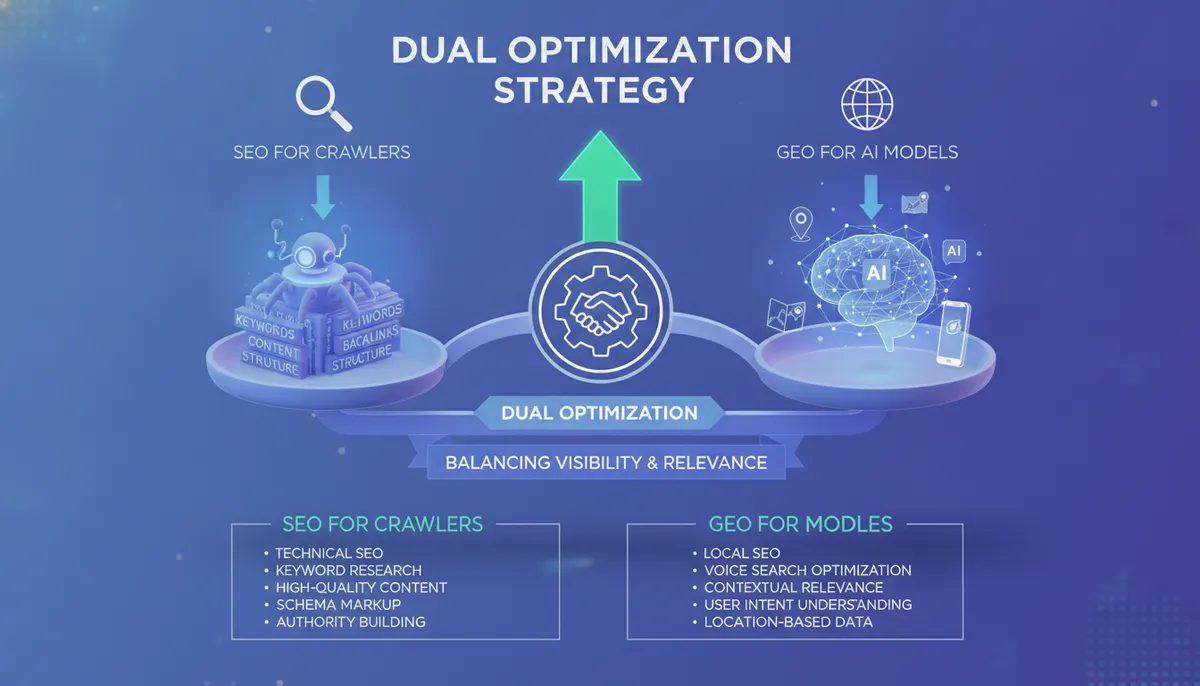
Traditional SEO isn't going anywhere, it’s just getting a roommate. Think of your foundational SEO strategies as the bedrock of your digital presence. You still need those high-volume, relevant keywords strategically placed in your title tags and meta descriptions to catch the eye of traditional crawlers. Technical health remains a non-negotiable entry fee; if your site speed is sluggish or your mobile responsiveness is an afterthought, you're invisible to both Google and your users. High-quality, authoritative content that answers a query thoroughly is still the best way to earn those vital backlinks that build your domain’s credibility over time.
However, the rise of generative AI search means you need to layer in cutting-edge GEO strategies. To win with LLMs like ChatGPT or Perplexity, you must prioritize conversational clarity. Stop writing for rigid algorithms and start answering questions in a natural, direct format that mirrors how people actually speak. Implementing structured data, such as FAQ or How-To Schema, acts as a roadmap for AI, helping it parse and verify your facts instantly. If an AI engine can’t verify your data points through clean code, it simply won't cite you as a trusted source in its generated summaries.
Your brand's authority now extends far beyond your own URL. LLMs verify your credibility by looking at established "entities" in authoritative databases like Wikidata, Crunchbase, and LinkedIn. If your brand presence is a ghost town on these platforms, AI models will struggle to trust you. You also need to focus on context-independence. In a GEO world, AI tools often pluck single paragraphs to answer a user's prompt. Every section of your content should be able to stand alone and make perfect sense, even when stripped of the surrounding article. This "snackable" accuracy is what gets you cited.
The beauty of this shift is the synergy between the two disciplines. SEO and GEO aren't fighting for the same space; they reward the same high-quality behavior. Both prioritize topical authority, meaning that building deep content clusters around a specific subject signals expertise to both Google’s ranking algorithms and an LLM’s synthesis engine. Using a clear structural hierarchy, logical H2s, H3s, and bulleted lists, helps traditional crawlers index your page efficiently while allowing AI models to digest your insights without "hallucinating" or missing the point. Quality content remains king, but structure is now the crown it wears.
Measuring success in this dual era requires a radical mindset shift. The "zero-click" reality is here; research from Semrush shows that 80% of users resolve nearly 40% of their queries without ever clicking a link. You need to look past traditional organic traffic and track new GEO-specific KPIs like citation frequency. How often are tools like ChatGPT actually name-dropping your brand? Use specialized tools to monitor your "Share of Voice" in AI-generated answers compared to your competitors. If you’re being cited as the definitive answer, you’re winning, even if that user doesn't land on your homepage today.
Ultimately, mastering dual optimization is about building a holistic digital footprint. You should continue to track your traditional rankings and conversions, but layer in brand sentiment analysis and direct answer fulfillment metrics. Tools like the Semrush AI Visibility Toolkit can help you see where your brand stands in the generative landscape. By merging these two worlds, you ensure that whether a user is typing a query into a search bar or chatting with an AI assistant, your brand is the one providing the solution. It’s time to stop choosing between SEO and GEO and start winning at both.
Supercharge Your Optimization with GEOly
Executing a dual strategy shouldn’t feel like managing two separate full-time jobs. That’s where GEOly steps in as the ultimate directory for both classic SEO and the emerging world of Generative Engine Optimization. We’ve done the heavy lifting by vetting tools for you, from technical audit platforms to specialized software that monitors AI mentions and manages entity presence. Whether you’re hunting for the latest rank trackers or tools to ensure content clarity for LLMs, we provide the curated roadmap needed to keep your brand visible.
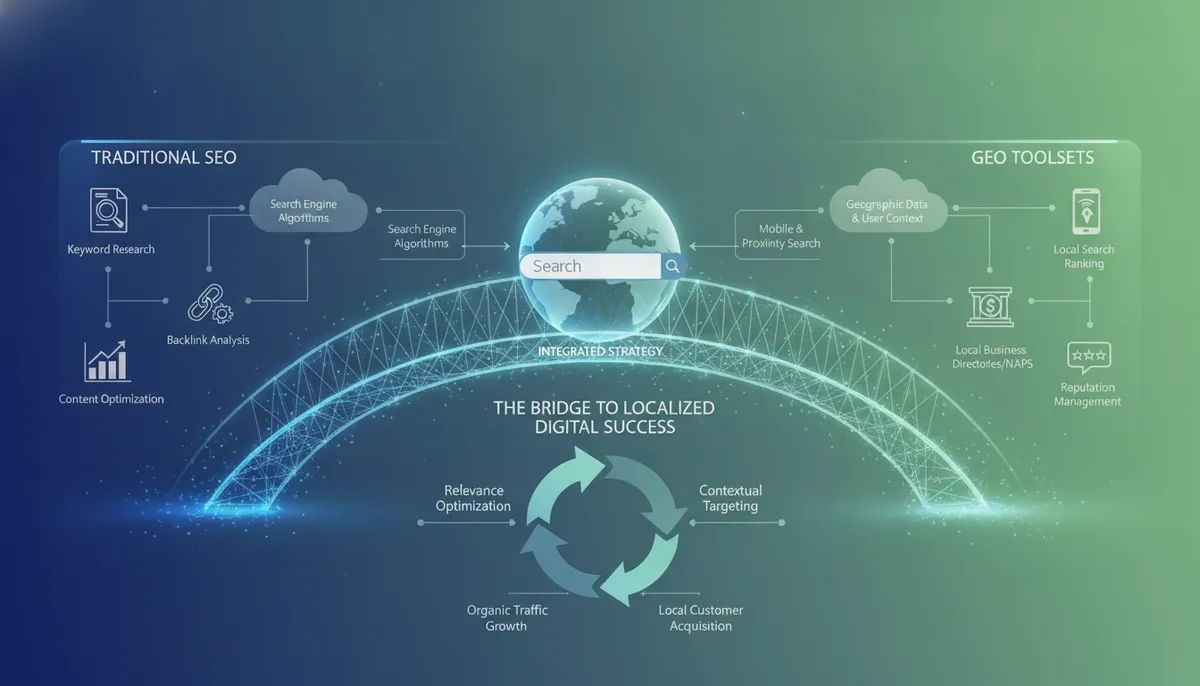 Instead of getting lost in a sea of fragmented software, use GEOly to identify tools that bridge the gap between search engines and AI answer engines. Our directory highlights platforms that provide a cohesive view of your visibility, ensuring you aren't just ranking for blue links but securing high-authority spots in AI-synthesized summaries. Centralizing these resources helps you adapt to AI shifts quickly without losing the technical SEO edge that still drives your daily traffic. It’s time to stay visible across every channel, from Google to Perplexity, without the tool-fatigue that slows most marketers down.
Conclusion: Embracing the Future of Search
The search landscape isn't just shifting; it’s being rebuilt around AI. While traditional SEO remains essential for direct site traffic, Generative Engine Optimization (GEO) has become the necessary new frontier. You shouldn't be choosing between them. Success today requires a "dual optimization" strategy: satisfying Google’s crawlers while remaining factual and conversational enough for Large Language Models to cite your brand as an authority.
 The future belongs to those who adapt their content for both human clicks and AI-synthesized summaries. By integrating specialized GEO visibility monitoring with classic technical SEO, you ensure your impact carries across every interface. The AI era is here, and it demands a comprehensive, adaptable approach. Start exploring the latest tools and resources at GEOly today to keep your competitive edge.