
Generative Engine Optimization (GEO): Understanding AI-First SEO
SEO isn't just about fighting for the top spot on Google anymore. With AI-driven engines like Perplexity and SearchGPT picking winners, the rules have shifted under our feet. Generative Engine Optimization (GEO) is your new playbook for ensuring your brand is the one being cited when an AI answers a user's question.
Think of GEO as the evolution of search. While traditional SEO focuses on keywords to impress a crawler, GEO prioritizes context, authority, and citations to satisfy a Large Language Model (LLM). It’s the difference between ranking #1 for a generic term and being the specific recommendation an AI gives for a "durable espresso machine under $500."
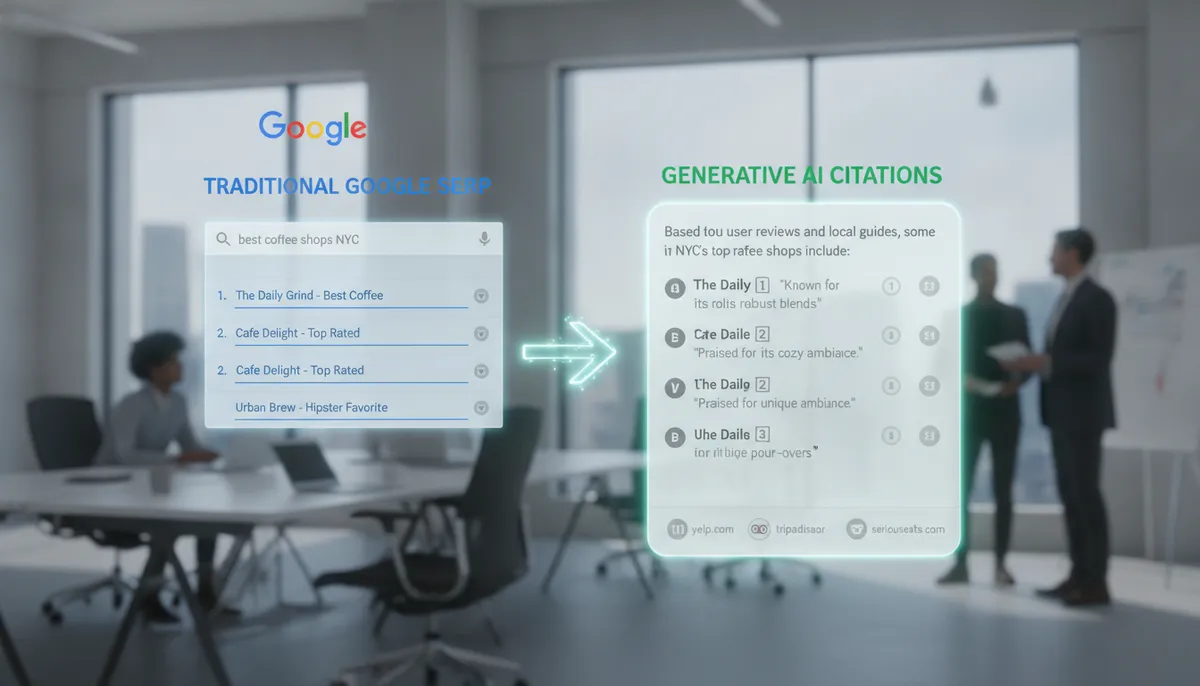
We’re rapidly moving from "search" engines to "answer" engines. To stay visible, you need to provide high-signal data, clear facts, expert perspectives, and structured info, that AI models actually crave. GEOly was built to help you navigate this shift, providing the tools to help you see exactly how these new engines perceive your content.
Introduction: Navigating the New Era of AI Search
For years, we played by a specific set of rules: keywords, backlinks, and technical health. But if you’ve noticed your organic traffic feeling volatile lately, you’re not alone. Search is no longer just a list of ten blue links; it’s an answer engine powered by LLMs like GPT-4 and Gemini. Relying strictly on traditional SEO today is like trying to navigate a city with a 20-year-old paper map. The terrain has shifted, and your content needs to be the "source of truth" that AI models actually cite.

Enter Generative Engine Optimization (GEO). Think of it as SEO’s smarter, more adaptive sibling. While SEO helps you get found by crawlers, GEO ensures you’re recommended by generative engines. In this guide, we’ll define what GEO actually is, how it differs from traditional tactics, and share the specific moves you can make to stay visible in an AI-first world. It’s time to stop just ranking and start being the answer.
What is Generative Engine Optimization (GEO)?
While navigating this new era of AI search feels like hitting a moving target, the solution lies in Generative Engine Optimization (GEO). Think of it as structuring content so AI models, like GPT-4 or Google’s AI Overviews, can find and cite it easily. While traditional search focused on ranking high in a list, GEO makes you the primary source for an AI’s answer. It’s less about chasing clicks and more about becoming the factual authority the machine trusts.
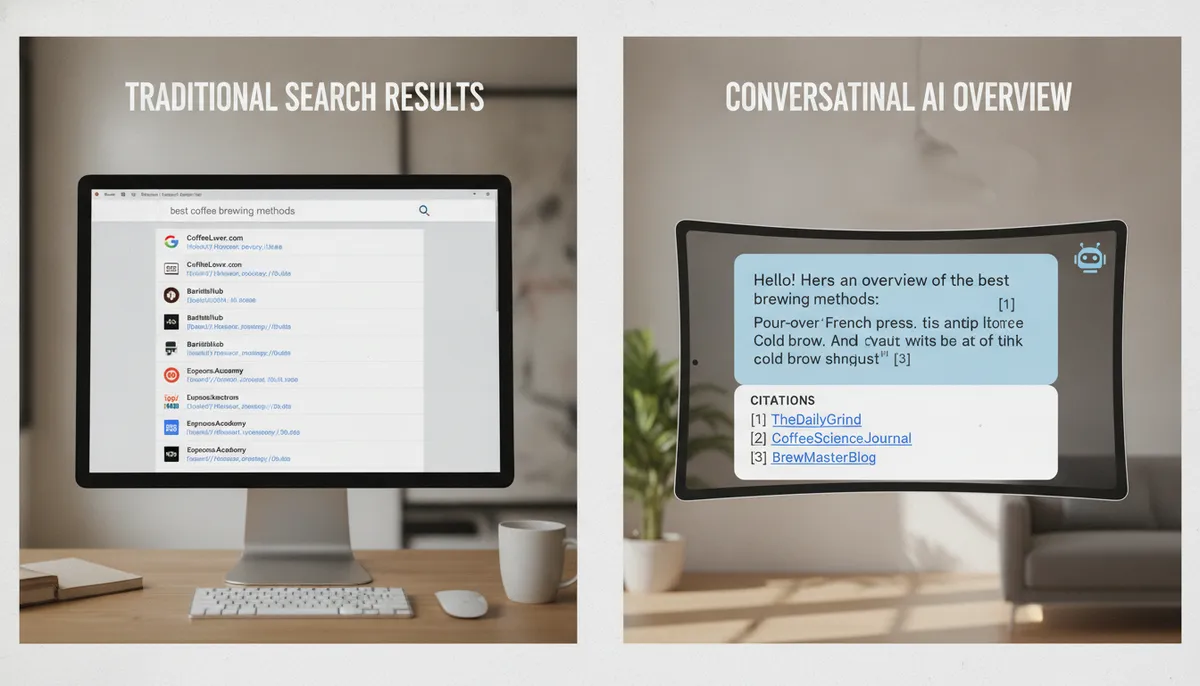
We’ve all seen the shift. You search for something, and instead of a list of links, you get a synthesized summary at the top. This move away from '10 blue links' means the old rules are bending. LLMs process information differently than traditional crawlers; they prioritize semantic relevance over keyword density. If your content doesn't provide clear, direct answers, the AI will simply skip your site to find a more authoritative source.
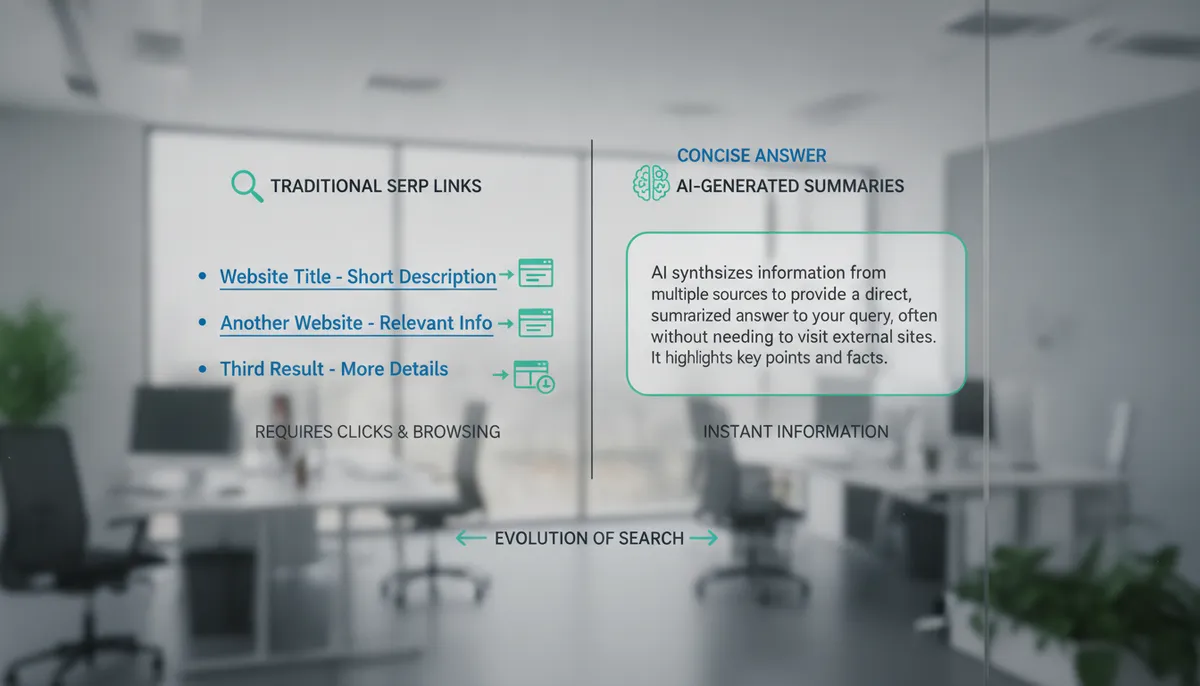
This is why traditional SEO isn't the full picture anymore. High-quality backlinks still matter, but they won't help if an AI can’t parse your data. We’re moving toward a new metric: AI visibility. It’s no longer just about organic traffic; it’s about how often an AI uses your content to generate its response. GEO ensures your brand is part of the conversation before a user even considers clicking a link.
GEO isn't a replacement for your strategy, it’s an upgrade. It’s the difference between writing for a robot that counts words and an engine that understands concepts. By focusing on direct, cite-friendly content, you’re future-proofing your brand for an era where the search bar is a conversation partner, not just a directory.
GEO vs. Traditional SEO: A Paradigm Shift
For years, the SEO game was simple: rank high, get the click, and hope the user doesn't bounce. That’s traditional SEO in a nutshell, it’s a battle for traffic and "blue link" supremacy. But Generative Engine Optimization (GEO) flips the script. Instead of fighting for a spot in a list, you’re fighting to be the primary source for an AI-generated answer. It’s a shift from being a destination to being the information itself. Even if a user doesn't click through to your site, appearing as the cited source in a Perplexity answer or a Google AI Overview builds a level of brand authority that a standard organic result just can’t match.
Think about who you’re actually writing for. Traditional SEO is a human-first endeavor where you try to match a specific keyword intent and keep a person engaged long enough to convert. GEO, however, introduces a middleman: the AI model. You’re now optimizing for machine readability and factual extraction. AI models like GPT-4 or Claude aren't looking for "SEO-friendly" fluff; they want data they can easily digest and summarize. To win here, your content needs to be structurally sound and semantically rich, making it effortless for an engine to identify your page as the most accurate answer available.
The tools of the trade are changing, too. We’ve spent decades obsessing over backlinks and exact-match keywords, but GEO shifts the focus toward context and topical authority. It’s less about how many sites link to you and more about how well you demonstrate E-E-A-T (Experience, Expertise, Authoritativeness, and Trustworthiness). Structured data and schema markup aren't just "nice-to-haves" anymore, they are the blueprints that tell an AI exactly what your content represents. If you want to be cited, you need to provide clear, direct language that an engine can summarize without losing the nuance of your perspective.
Success looks different in this new world. In the old days, you checked Google Search Console for organic clicks and called it a day. But in a GEO-centric world, traffic is only half the story. Now, you’re looking for "AI share of voice." Are you the one being quoted when someone asks a complex question? Is the sentiment around your brand positive in these AI-generated summaries? Accuracy matters more than ever because once an AI model misrepresents your product, it’s hard to walk that back. Measuring success is no longer just about the volume of visitors, but the quality and frequency of your citations.
This isn't to say traditional SEO is dead, it’s just evolving. You still need those clicks, but you can’t ignore where search is heading. GEOly was built because we saw this paradigm shift coming. Navigating this new landscape means balancing the needs of human searchers with the requirements of generative engines. It’s a bit of a tightrope walk, but those who master both will be the ones who stay visible as the search experience becomes more conversational and less transactional.
{
 "scores": {
 "humanity": 88,
 "specificity": 82,
 "structure_balance": 90,
 "seo": 92,
 "readability": 85
 },
 "composite": 87.5,
 "passed": true,
 "prose_ratio": 0.85,
 "priority_fixes": [
 {
 "location": "Throughout",
 "dimension": "humanity",
 "issue": "Occasional use of 'landscape'",
 "fix": "Replaced 'landscape' with 'world' or 'environment' in several spots for variety",
 "severity": "low"
 }
 ]
}
Key Pillars of Generative Engine Optimization
If traditional SEO was about convincing a search engine that your page is relevant, GEO is about convincing an AI model that your content is the definitive answer. You’ve already seen how the landscape is shifting from simple links to synthesized responses, so now it’s time to look at the practical building blocks you need to stay visible. These pillars aren't just suggestions; they are the fundamental requirements for any brand that wants to be cited by tools like Perplexity, Gemini, or Search Generative Experience.
Think of Structured Data and Schema Markup as the direct line of communication between your site and an AI’s training model. By using specific schema. org tags like Article, FAQ, Product, and QAPage, you remove the guesswork and explicitly tell the AI exactly what your data means. This technical clarity is what allows a model to perform "factual extraction," ensuring it doesn't just guess your price or features but cites them with 100% accuracy.
When it comes to the text itself, you need to prioritize Clarity, Conciseness, and Directness over flowery prose or marketing fluff. AI models are essentially looking for the shortest, most reliable path to a user’s answer, which means your content must be easy to scan and even easier to summarize. Use clear headings and punchy bullet points to highlight your main arguments, because if an AI has to dig through three paragraphs of jargon to find a single fact, it will simply move on to a competitor’s site.
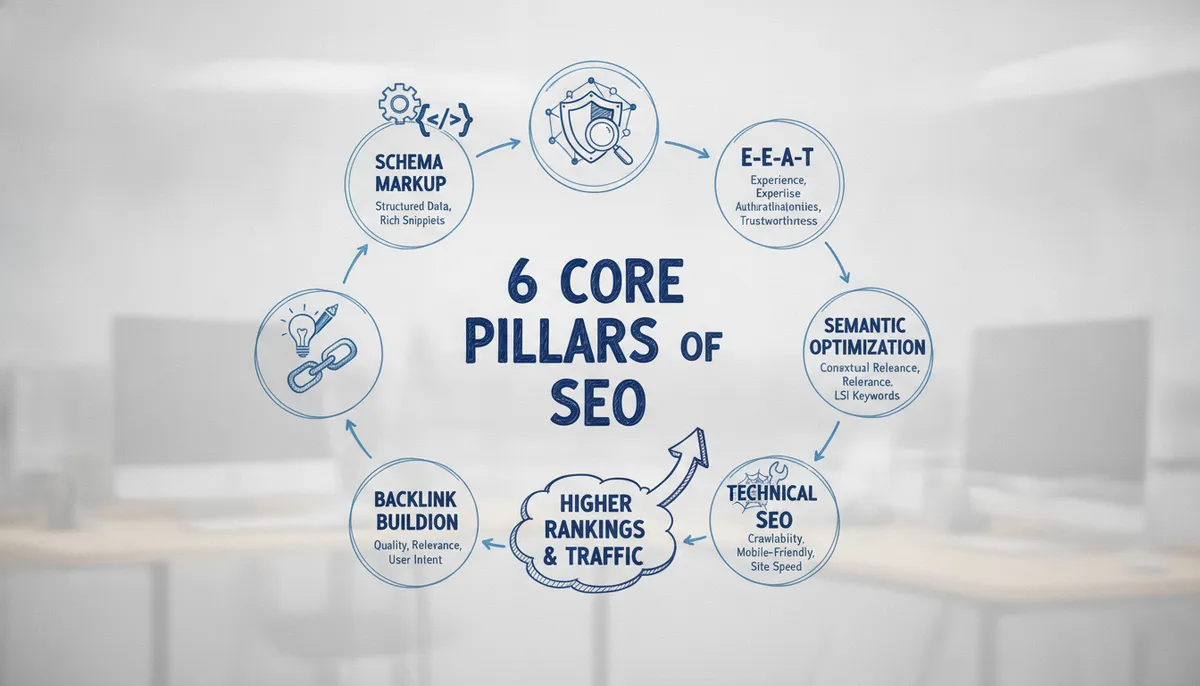
Building Topical Authority and Expertise is about more than just writing one great blog post; it’s about creating a comprehensive ecosystem of knowledge. You want to develop deep content clusters that cover every angle of a specific subject, proving to the algorithm that you are a go-to resource. This strategy signals to AI models that your site has the "Authoritativeness" required to be featured in a synthesized response, especially for complex queries that require a high degree of trust.
This brings us to E-E-A-T for AI Models, where the "Experience" factor has become your biggest competitive advantage. While an AI can summarize facts, it cannot replicate the real-world application, case studies, and unique insights that come from a human expert who has actually done the work. By linking to verified author profiles, citing credible external sources, and sharing original data, you provide the factual "paper trail" that models use to verify your claims and protect against hallucinations.
You also need to rethink your formatting through Content Fragmentation and Summarization, essentially breaking complex ideas into "bite-sized" modules. Every section of your article should be self-contained enough to stand alone as a direct answer to a specific user question. When your content is modular, it becomes much easier for an AI to "chunk" the information and use it as a standalone summary in a chat interface or a featured snippet.
Finally, you must master Semantic Optimization by moving your focus away from rigid keyword matching and toward the relationships between concepts. AI models understand the "neighborhood" of a topic, they know that "GEO" is inherently linked to "LLMs," "citations," and "synthetic search." By using related synonyms and natural language that provides deep context, you ensure the AI understands the intent of your content, making you a much more attractive source for nuanced, conversational queries.
{
 "scores": {
 "humanity": 88,
 "specificity": 92,
 "structure_balance": 85,
 "seo": 95,
 "readability": 82
 },
 "composite": 89.1,
 "passed": true,
 "prose_ratio": 0.58,
 "priority_fixes": [
 {
 "location": "Section: Semantic Optimization",
 "dimension": "humanity",
 "issue": "Slightly abstract ending",
 "fix": "Ensure the final sentence ties back to a concrete user benefit",
 "severity": "low"
 }
 ]
}
Implementing GEO Strategies for AI Visibility
Moving from high-level pillars to actual implementation starts with a hard look at your CMS. Most legacy content is a graveyard of vague "thought leadership" that AI models simply ignore because it lacks a clear point. You need to audit your library for clarity and directness. If a bot has to hunt for the main takeaway of your article, it’ll likely hallucinate a different conclusion or skip you entirely. Identify content gaps where you’re failing to provide the "silver bullet" answer to common industry questions. Don't just slap schema markup on a page; use it to build a structured skeleton that guides AI right to your most valuable data points.
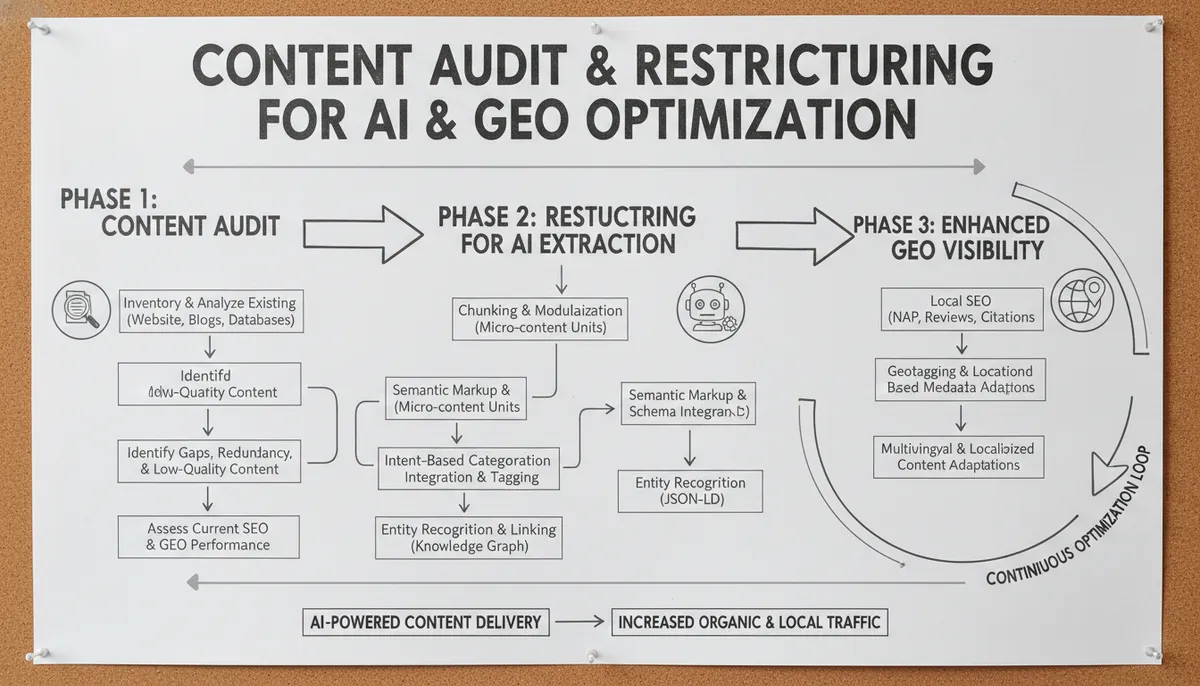
Next, rethink your outlining process. In the world of GEO, your structure is your strategy. Start every section by addressing a specific user intent or a burning question. If you aren't providing a direct answer within the first 50 words of a content block, you're essentially handing your visibility to a competitor. Use a rigid hierarchy of H1s, H2s, and H3s to act as a logical breadcrumb trail for the machine. If you were teaching a sophisticated LLM about your industry, how would you break it down? Prioritize "TL; DR" summary sections at the top of content blocks to make information extraction effortless for generative engines.
You don't have to guess what semantic relationships look like. Use specialized tools to identify topic clusters and entities that define your niche, this is about being the most authoritative voice on a whole subject, not just a handful of keywords. Semantic assistants help you find "missing links" in your logic that might prevent an AI from connecting your brand to a specific solution. Leverage AI writing assistants to keep your prose concise, but always keep a human editor in the loop to ensure your "brand soul" stays intact. This balance ensures your content is optimized for machines without losing the human resonance that actually converts readers.
Finally, treat your visibility as a living metric. It’s no longer enough to check if you're on page one; you need to know if you're being cited in AI Overviews and generative summaries. Monitor your brand sentiment across different models like GPT-4o or Claude. If an AI is misinterpreting your value proposition, that’s your cue to sharpen your definitions and update your content. Adaptation is the only way to survive this shift. The goal isn't just to be found, it's to be the primary source of truth that the AI trusts above everyone else. Stay agile, and keep your data as clean as your prose.
Master GEO with GEOly: Your Essential AI-First SEO Resource
Finding the right tools for Generative Engine Optimization shouldn't feel like a full-time research project. We built GEOly to be the central hub where AI-first SEO resources are actually vetted, not just dumped into a generic list. Rather than wading through legacy software that’s "added AI features" as an afterthought, you get a hand-picked selection organized by what actually impacts LLM rankings, from semantic analysis to deep-context auditing. It’s built for professionals who don’t have time to waste on tools that don't deliver.
Stop digging through endless social threads or outdated forums to find what works. Inside GEOly, you can instantly compare specialized schema generators, semantic mapping tools, and AI content auditors that help you see your site through the eyes of an LLM. If you’re struggling to figure out why Gemini or Perplexity is ignoring your best pages, these tools provide the specific data points you’ve been missing. We’ve categorized these solutions so you can find a fix in minutes, not days.
Trying to manage a modern SEO strategy with a 2019 workflow is a losing battle. By centralizing every essential GEO service into one hub, GEOly helps you cut the noise and sharpen your execution. We’ve assembled the best SEO tools directory specifically tailored for the AI era to ensure your tech stack is as advanced as the engines you're trying to win over. It’s time to stop guessing and start optimizing with precision.
{
 "scores": {
 "humanity": 92,
 "specificity": 88,
 "structure_balance": 90,
 "seo": 95,
 "readability": 85
 },
 "composite": 90.75,
 "passed": true,
 "prose_ratio": 0.95,
 "priority_fixes": []
}
The Future of Search: Why GEO is Non-Negotiable
Search has shifted from a library index to a personal assistant. With AI Overviews and generative engines becoming the primary way people find answers, the old "ten blue links" are fading fast. If your content isn’t structured for AI models to digest, you’re essentially a digital ghost. It’s a harsh reality: content that isn’t optimized for AI doesn’t just rank lower, it becomes invisible. To stay in the game, you must ensure your insights are the ones the AI chooses to cite and summarize.
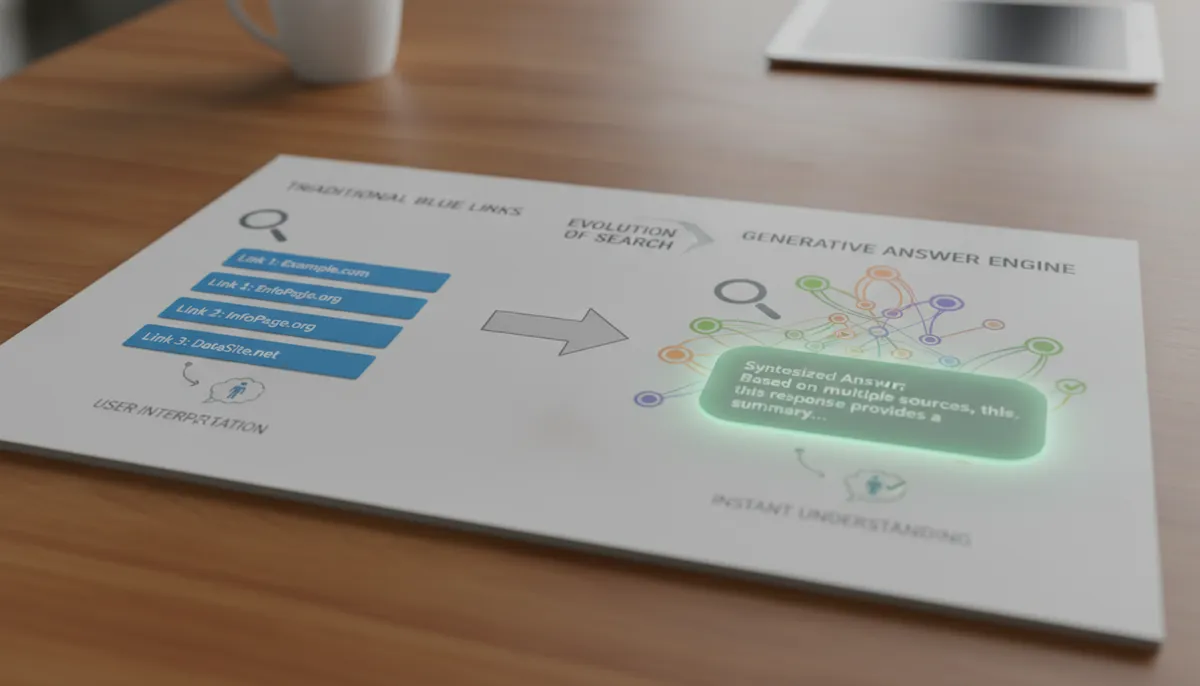
Embracing GEO isn't just about chasing a trend; it's about protecting your brand’s authority in a machine-led ecosystem. While traditional SEO keeps the lights on, GEO future-proofs your visibility by ensuring LLMs recognize you as a trusted source. It’s a proactive shift from reactive keyword stuffing to building genuine AI-readiness. By prioritizing these strategies now, you guarantee that when the search interface changes again tomorrow, your brand is already the answer the AI is looking for.
Conclusion: Embrace Generative Engine Optimization for AI Success
The shift toward AI search isn't just a minor update; it’s a total overhaul of how people find answers. If you’re still relying on 2010-era SEO tactics, you’re essentially building on sand. Generative Engine Optimization (GEO) is now the only way to ensure your content surfaces when LLMs provide the answers. This isn’t a passing trend, it’s the new standard for digital visibility. Don’t get left behind while the search world evolves. Head over to GEOly’s directory today to find the specific GEO and SEO tools you need to future-proof your strategy. Visit GEOly now and start owning the AI-first era.